Can Therapy Help Stop Overthinking?
Can Therapy Help Stop Overthinking? Understanding the Cycle and Finding Relief
Introduction
Almost everyone overthinks occasionally. You may replay a conversation, worry about a decision, imagine everything that could go wrong, or repeatedly question whether you made the right choice. However, when overthinking becomes constant, exhausting, and difficult to control, it can interfere with sleep, work, relationships, confidence, and emotional well-being.
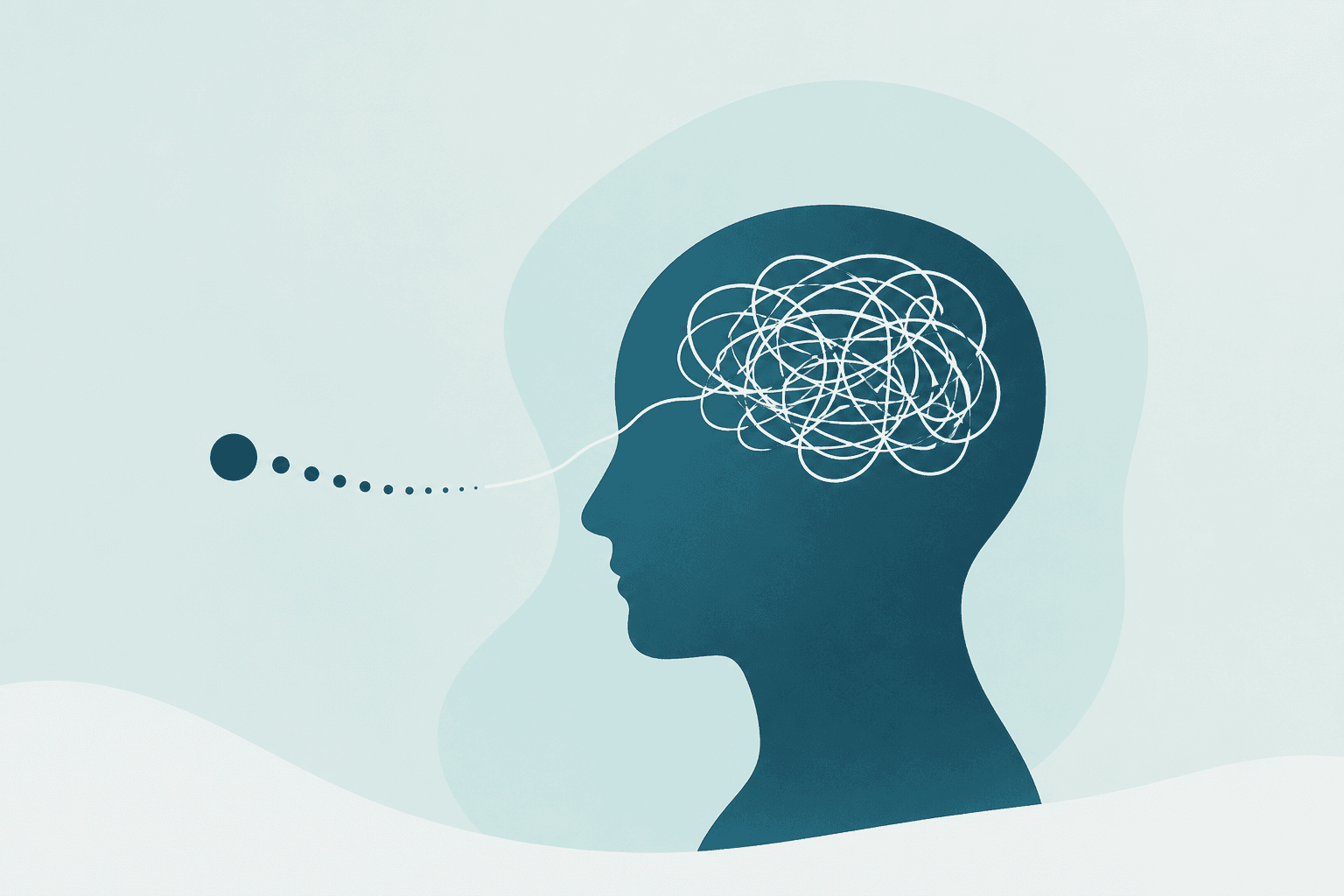
Overthinking is not a formal mental health diagnosis by itself. It usually describes repetitive patterns of worry and rumination. Worry tends to focus on what might happen in the future, while rumination repeatedly examines past events, mistakes, disappointments, or painful emotions. Repetitive negative thinking can contribute to the development and continuation of anxiety and depression, which is why many forms of psychological treatment directly address it.
So, can therapy help stop overthinking? Therapy may not remove every unwanted thought, because thinking is a normal human process. However, it can help you understand why your mind becomes trapped in repetitive loops, challenge unhelpful beliefs, manage uncertainty, and respond to thoughts more calmly.
Working with an experienced Indian therapist, choosing therapy in India, or speaking with an Indian therapist online can provide structured and culturally sensitive support. For Indians living abroad, NRI counseling mental health services can address overthinking connected to migration, career pressure, loneliness, relationships, family expectations, and cultural identity.
What Does Overthinking Really Look Like?
Overthinking is more than carefully considering a problem. Healthy reflection generally helps you understand a situation and move toward a decision. Overthinking, by contrast, keeps the mind active without creating clarity or meaningful action.
A person may continuously replay something they said during a meeting, wonder whether another person misunderstood them, or mentally prepare for every possible negative outcome. They may repeatedly ask themselves questions such as, “What if I fail?”, “Why did I say that?”, “What if they are upset with me?” or “What if I make the wrong decision?”
These thoughts can feel productive because the mind appears to be solving a problem. In reality, they often increase confusion, tension, and self-doubt. The person may spend hours thinking without reaching a useful conclusion.
Overthinking can also appear physically. It may contribute to headaches, muscle tension, restlessness, tiredness, digestive discomfort, rapid heartbeat, or difficulty sleeping. When excessive fear and worry become intense and persistent, they may be connected to an anxiety disorder. The World Health Organization notes that anxiety disorders commonly involve excessive fear and worry, often accompanied by physical tension.
A qualified therapist in India can help determine whether repetitive thinking is linked to everyday stress, anxiety, depression, trauma, perfectionism, relationship difficulties, or another concern.
Why Is It So Difficult to Stop Overthinking?
Overthinking often begins as an attempt to protect yourself. Your mind may believe that examining every detail will prevent rejection, failure, embarrassment, disappointment, or loss. Unfortunately, the more attention you give to threatening possibilities, the more urgent and believable they can feel.
Past experiences can also influence this pattern. Someone who has been frequently criticized may examine every social interaction for signs of disapproval. A person who has experienced betrayal may repeatedly analyse a partner’s words and behaviour. Someone raised in an environment where mistakes were punished may believe that every decision must be perfect.
Perfectionism is another common contributor. When you believe there is only one correct choice, even a simple decision can become emotionally exhausting. You may delay taking action because you fear regret, judgment, or failure.
Overthinking may also intensify during uncertainty. Career changes, immigration concerns, marriage decisions, financial pressure, parenting challenges, and health worries can make the brain search continuously for certainty that may not be available.
These challenges are often especially relevant to Indians living overseas. NRIs may manage expectations from family in India while adapting to a different workplace, relationship culture, parenting system, or social environment. Culturally responsive NRI counseling mental health support can help clients understand these conflicting pressures without dismissing their background or values.
How Can Therapy Help Stop Overthinking?
Therapy helps by changing your relationship with your thoughts. Instead of treating every thought as a fact, warning, or problem that must immediately be solved, you learn to examine it with greater distance and curiosity.
An experienced India therapist may first help you recognise your triggers. Overthinking may increase after social interactions, disagreements, criticism, work presentations, family calls, or periods of loneliness. Identifying these patterns makes the experience feel less random and more manageable.
Therapy can also help you distinguish between productive problem-solving and repetitive mental looping. Productive thinking normally leads to a decision, plan, or action. Rumination repeatedly circles around the same questions without producing a solution.
Another important goal is learning to tolerate uncertainty. It is impossible to guarantee that every decision will succeed or that everyone will approve of you. Therapy can help you accept reasonable uncertainty while still making thoughtful choices.
Professional Indian therapy may also explore deeper emotional concerns hidden beneath overthinking. The repeated thoughts may be connected to fear of rejection, low self-worth, unresolved grief, guilt, trauma, or the belief that you must always remain in control.
Cognitive Behavioural Therapy for Overthinking
Cognitive Behavioural Therapy, commonly called CBT, is frequently used to address anxiety, depression, and repetitive negative thinking. CBT examines the relationship between thoughts, emotions, and behaviour. It helps people identify unhelpful thinking patterns, test whether those thoughts are accurate, and develop more balanced responses. The American Psychological Association describes CBT as an effective psychological treatment for several concerns, including anxiety and depression.
For example, you might think, “I made one mistake during the presentation, so everyone must think I am incompetent.” A therapist may help you examine the evidence supporting that belief, consider alternative interpretations, and recognise whether you are assuming that you know what others think.
A CBT thought record is one practical tool used to document a situation, identify emotions and automatic thoughts, examine the available evidence, and create a more realistic perspective. The NHS describes thought records as a way to understand how thoughts and behaviours influence each other and to begin challenging unhelpful patterns.
The goal is not to replace every negative thought with unrealistic positivity. It is to develop thinking that is more accurate, flexible, and compassionate.
The best therapists in India may use CBT alongside mindfulness, behavioural strategies, emotional regulation, or relationship work, depending on the client’s needs.
Mindfulness and Learning to Observe Thoughts
Mindfulness can help people notice thoughts without immediately reacting to them. Rather than arguing with every thought or attempting to force it away, you learn to recognise it as a temporary mental event.
For example, instead of saying, “Something terrible will happen,” you may learn to say, “I am noticing that my mind is predicting a negative outcome.” This small change creates distance between you and the thought.
Mindfulness does not require you to empty your mind. It involves returning attention to the present moment when the mind moves into repetitive worries. Breathing exercises, grounding techniques, body awareness, and guided meditation may all be used as part of treatment.
An online Indian therapist can teach these skills during virtual sessions and help you apply them to real-life situations. This may be especially useful for clients searching for therapist online India services because they want support from home, need flexible appointments, or live outside India.
Practical Techniques Therapy May Teach
Therapy often combines emotional exploration with practical strategies. One method is scheduled “worry time,” where you set aside a limited period to write down concerns rather than allowing them to dominate the entire day. NHS guidance recommends recording worries, separating solvable problems from hypothetical concerns, and postponing repetitive worry until a planned period.
A therapist may also help you practise making decisions with reasonable rather than perfect information. You can learn to set time limits, identify what is within your control, and take one manageable action instead of mentally reviewing every possibility.
Behavioural activation may be useful when overthinking leads to withdrawal. Engaging in exercise, hobbies, work, social contact, or meaningful routines can redirect attention toward real experiences rather than internal loops.
Self-compassion is equally important. Harsh self-criticism often strengthens rumination. Learning to speak to yourself with the same fairness you would offer another person can reduce emotional intensity and help you recover from mistakes more quickly.
Can Relationship Counselling Help with Overthinking?
Overthinking frequently affects relationships. A person may analyse messages, worry about a partner’s tone, seek repeated reassurance, or assume that conflict means the relationship is ending. These reactions can create misunderstandings and emotional exhaustion for both partners.
Relationship counselling India services can help couples understand how anxiety, attachment patterns, and communication habits contribute to repetitive thinking. Therapy can teach partners to express concerns directly, listen without becoming defensive, establish healthy boundaries, and reduce reassurance-seeking cycles.
Working with culturally informed therapists in India can be especially helpful when relationship concerns involve family involvement, arranged marriage expectations, intercultural relationships, long-distance marriage, or differences between traditional and modern values.
Online Therapy for Indians and NRIs
Many people delay counseling because they feel uncomfortable attending a clinic, live in an area with limited services, or cannot find a therapist who understands their cultural background. Indian online therapists make professional support more accessible without requiring travel.
An Indian therapist online can support clients living in India as well as NRIs in the United States, Canada, the United Kingdom, Australia, the Middle East, Europe, and other regions. Online sessions can make it easier to discuss family expectations, migration stress, identity conflicts, homesickness, workplace pressure, and relationship concerns with someone who understands Indian cultural contexts.
People often search phrases such as India therapist online, therapist India, therapists India, therapist Indian, therapist, India, or online Indian therapist when they are looking for culturally compatible care. Choosing a qualified professional matters more than relying only on a search phrase. The right therapist should offer appropriate training, confidentiality, clear boundaries, and an approach suited to your goals.
How Long Does It Take to Reduce Overthinking?
There is no universal timeline. Some people notice improvements after learning a few practical tools, while others need longer-term support because overthinking is linked to chronic anxiety, depression, trauma, obsessive patterns, or longstanding family experiences.
Progress may involve recognising thought loops sooner, spending less time ruminating, sleeping better, making decisions more confidently, and responding to uncertainty with less distress. The aim is not necessarily to prevent every anxious thought. It is to stop those thoughts from controlling your behaviour and quality of life.
Consistency is usually more valuable than expecting an immediate cure. Regular sessions with Indian therapists online can help clients practise new skills, review setbacks, and gradually develop healthier mental habits.
When Should You Seek Professional Support?
Consider speaking with a mental health professional when overthinking consumes a large part of your day, interferes with sleep, affects work or studies, damages relationships, or causes persistent anxiety and low mood. Support is also important when repetitive thoughts feel uncontrollable or lead to avoidance of important situations.
Overthinking accompanied by hopelessness, severe distress, thoughts of self-harm, or feeling unable to stay safe requires urgent professional or emergency support. Therapy is valuable, but a mental health crisis may require immediate assistance from local emergency services or a crisis resource.
Conclusion
Therapy can help stop overthinking from dominating your life, even though it cannot eliminate every unwanted thought. Through CBT, mindfulness, emotional exploration, behavioural change, and practical coping strategies, therapy helps you recognise repetitive patterns and respond to them more effectively.
Whether you choose a local therapist in India, therapy India services, Indian therapists online, or specialised NRI counseling mental health support, professional guidance can help you move from endless analysis toward clarity and meaningful action.
Overthinking is not a personal failure. It is often a learned attempt to create safety and certainty. With the right support, you can learn to trust yourself, tolerate uncertainty, make decisions with greater confidence, and remain present in your life.
Take the First Step with India Therapist
When your mind will not switch off, you do not have to manage it alone. India Therapist is a trusted online therapy platform connecting Indians and NRIs worldwide with culturally sensitive Indian psychologists.
Connect with a qualified online Indian therapist through India Therapist to understand your overthinking patterns, manage anxiety, improve relationships, and build healthier ways of responding to difficult thoughts. Professional support can help you spend less time trapped inside your mind and more time participating in the life happening around you.
Ready to talk to someone who understands?
Connect with an Indian therapist who speaks your language and understands your cultural context.