Blog
Expert insights on NRI mental health, cultural identity, relationships, and therapy guidance from our clinical team.
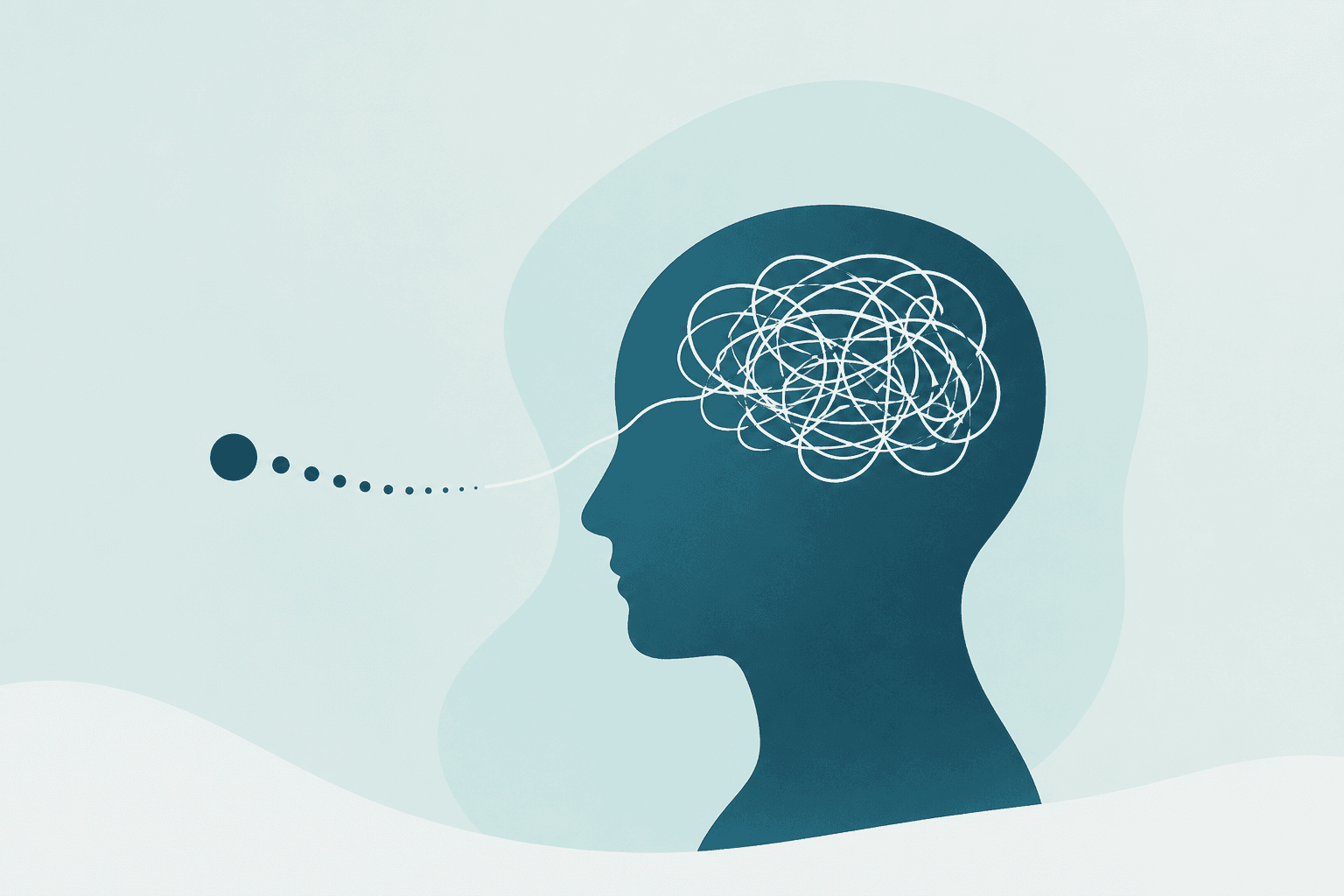
Can Therapy Help Stop Overthinking?
Overthinking can trap people in cycles of worry, self-doubt, and emotional exhaustion. Therapy can help by identifying triggers, challenging negative thoughts, building healthier coping skills, and improving emotional awareness. With support from Indian therapists, online therapy in India, and culturally sensitive NRI counseling mental health services, individuals can learn to manage repetitive thinking and feel more in control.
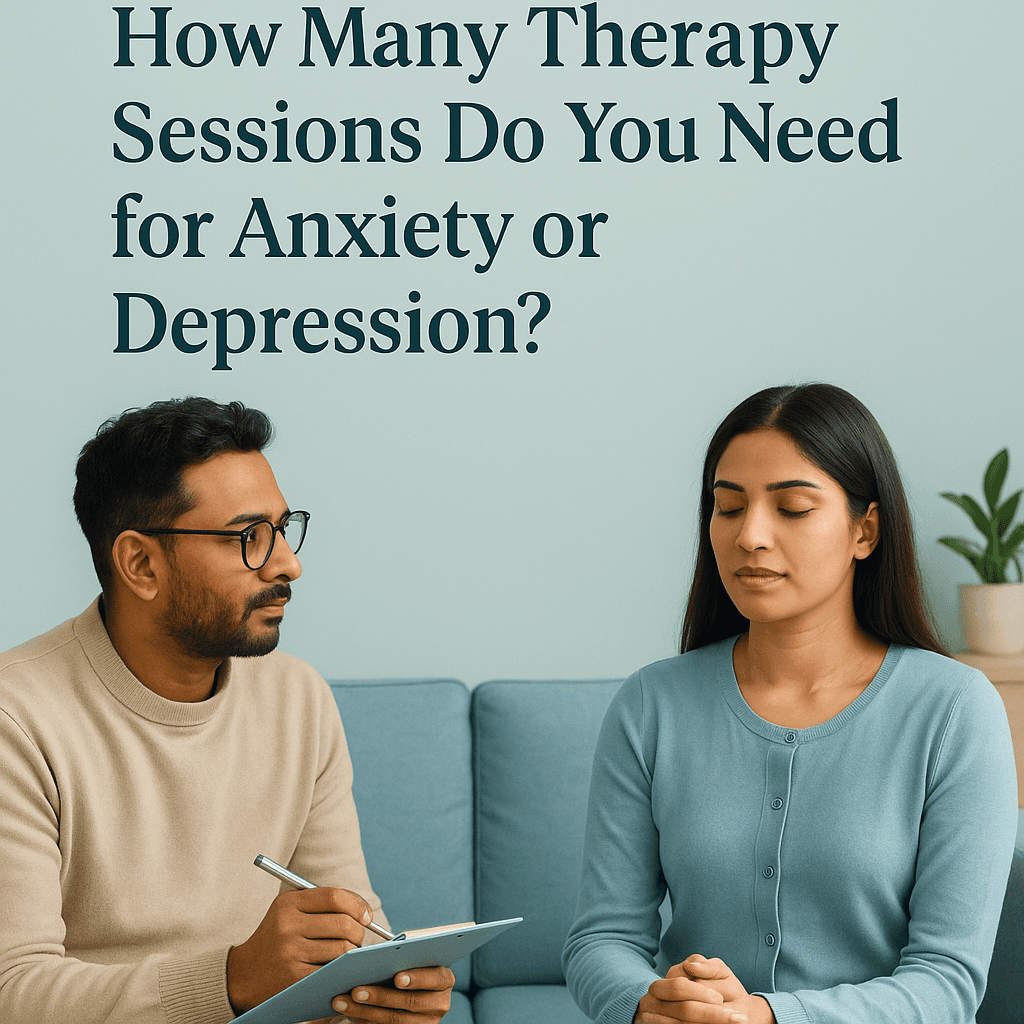
The Hidden Stress of Trying to Be Perfect
Perfectionism may look like ambition from the outside, but it often creates hidden stress, anxiety, burnout, and low self-worth. The constant pressure to avoid mistakes and meet high expectations can affect mental health, relationships, and emotional wellbeing. This blog explains how perfectionism develops, why it leads to emotional exhaustion, and how therapy helps individuals build self-compassion, healthier standards, and a stronger sense of self-worth.
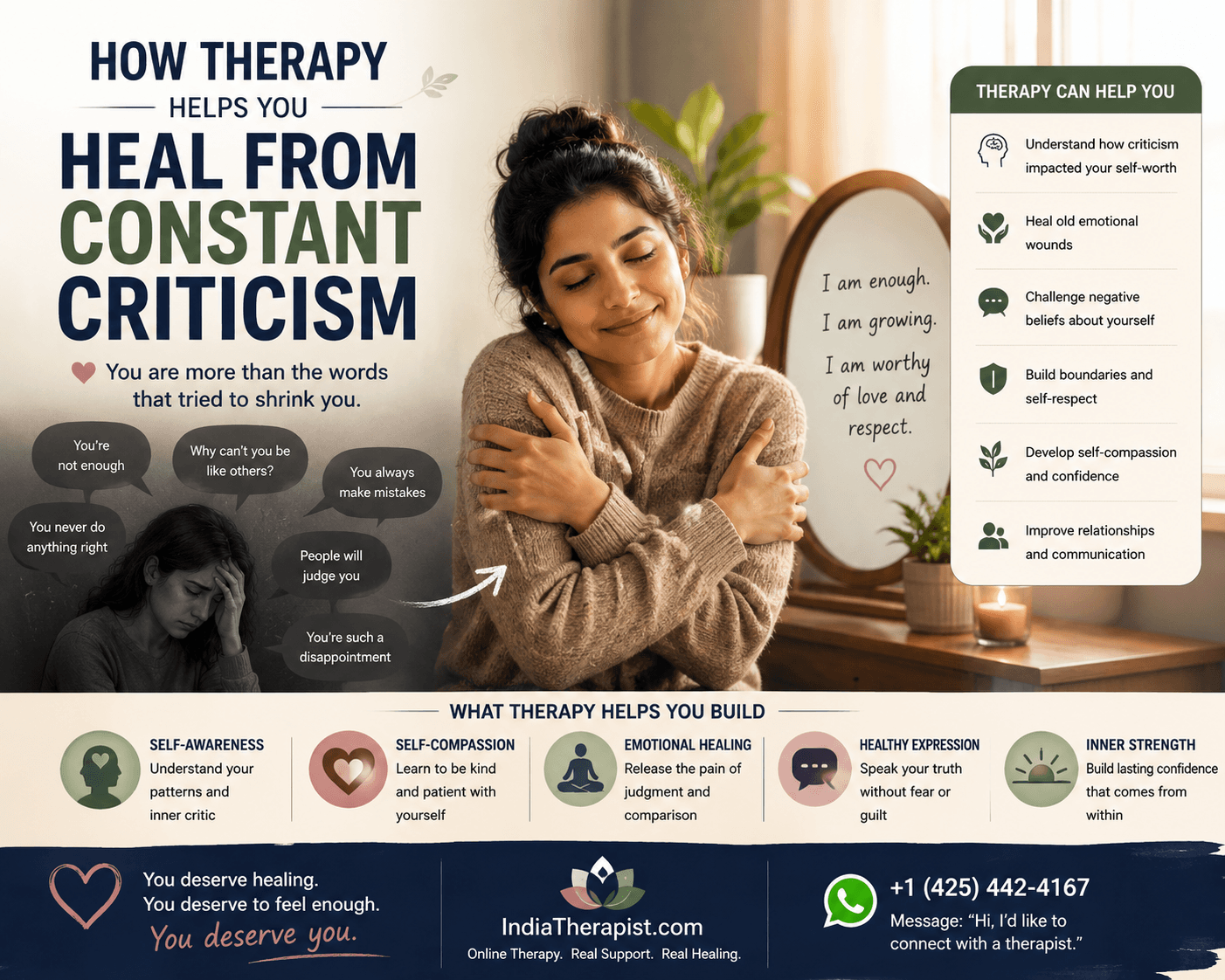
How Therapy Helps You Heal From Constant Criticism
Constant criticism can affect mental health, self-worth, relationships, and emotional wellbeing. Over time, criticism can become an inner voice that creates anxiety, perfectionism, people-pleasing, self-doubt, and emotional exhaustion. This blog explains how therapy helps individuals understand the impact of criticism, heal childhood wounds, build self-compassion, set boundaries, and rebuild confidence with support from culturally sensitive Indian therapists.
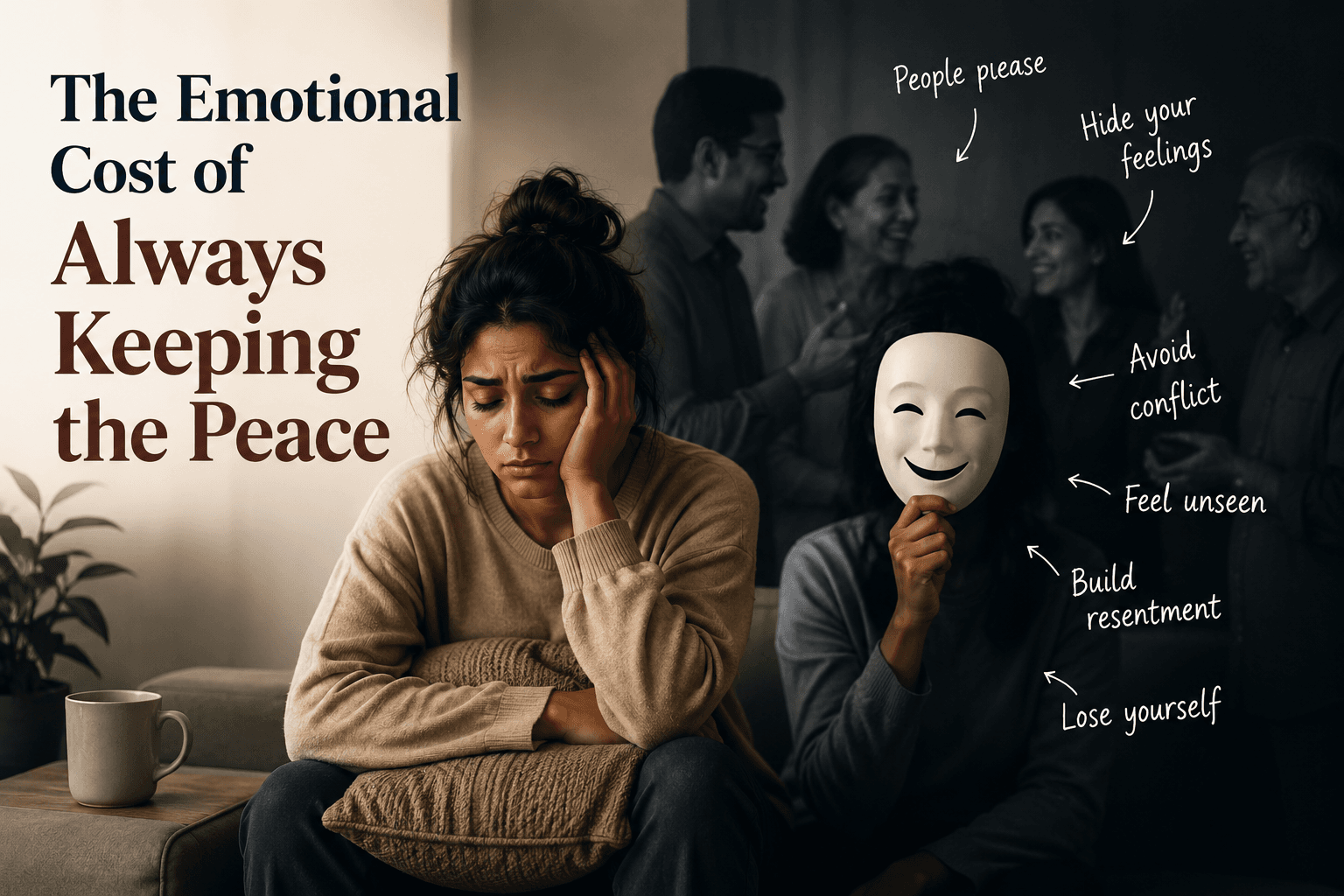
The Emotional Cost of Always Keeping the Peace
Always keeping the peace can seem mature, but when it involves suppressing emotions, avoiding conflict, and ignoring personal needs, it can damage mental health. This blog explores how peacekeeping leads to anxiety, resentment, emotional exhaustion, relationship distance, and poor boundaries. Therapy helps individuals understand their people-pleasing patterns, communicate honestly, set healthy boundaries, and create real emotional peace.
When Your Mind Feels Tired but Your Body Is Rested
Mental fatigue happens when the mind feels exhausted even though the body is physically rested. It is often caused by overthinking, burnout, anxiety, emotional exhaustion, stress, and unprocessed emotions. This blog explains why rest alone may not solve mental tiredness and how therapy can help individuals understand their emotional load, manage stress, reduce overthinking, and rebuild mental clarity.

The Silent Mental Health Challenges of Living Away From Home
Living away from home can bring independence, growth, and opportunity, but it can also create loneliness, homesickness, anxiety, emotional disconnection, and stress. This blog explores the silent mental health challenges faced by people living away from home, especially NRIs, and explains how therapy, counseling, self care, and culturally sensitive support from Indian therapists can help individuals build emotional balance and connection.
Why You Feel Emotionally Drained Even After Doing Nothing
Feeling emotionally exhausted even when you've done very little? Emotional fatigue often comes from overthinking, hidden stress, unresolved emotions, and the constant pressure to stay strong. This blog explores why emotional exhaustion happens, how it affects your mental well-being, and how therapy can help you regain emotional balance, energy, and inner peace.
The Hidden Mental Load of Being the Eldest Child
The eldest child often carries a hidden mental load of responsibility, family pressure, emotional support, sibling care, and expectations to always be mature. Over time, this can lead to anxiety, burnout, people-pleasing, guilt, emotional exhaustion, and difficulty setting boundaries. This blog explains how therapy helps eldest children understand their emotional burden, heal childhood patterns, build self-worth, and create healthier boundaries.

How Therapy Helps You Heal From Emotional Neglect
Emotional neglect happens when a person’s emotional needs are consistently ignored, dismissed, or unsupported, often beginning in childhood. It can affect attachment, self-worth, relationships, emotional awareness, and mental health in adulthood. This blog explains how therapy helps individuals understand childhood wounds, reconnect with their emotions, build boundaries, heal attachment patterns, and develop healthier relationships with themselves and others.

How Therapy Helps You Build Emotional Strength
Emotional strength is not about hiding feelings or pretending to be fine. It is the ability to understand emotions, manage stress, recover from setbacks, set boundaries, and heal from painful experiences. This blog explains how therapy helps build resilience, coping skills, emotional awareness, and emotional healing. With support from therapists and counseling, individuals can become stronger without becoming emotionally closed.

The Difference Between Stress and Anxiety: When to Seek Help
Stress and anxiety may feel similar, but they are different. Stress is usually connected to a specific pressure or situation, while anxiety can continue even when there is no clear threat. Both can affect mental health, sleep, relationships, and emotional wellbeing. This blog explains the difference between stress and anxiety, common signs to watch for, and when to seek therapy or anxiety counseling for better stress management and emotional support.

How Therapy Helps You Stop Repeating the Same Relationship Patterns
Many people repeat the same relationship patterns without realizing it. These patterns may include choosing emotionally unavailable partners, overgiving, fearing abandonment, avoiding conflict, or struggling with boundaries. This blog explains how attachment, self-worth, childhood experiences, and emotional wounds shape relationship choices. Therapy helps individuals build self-awareness, heal emotional patterns, improve communication, and create healthier relationships.
Why Indian Parents Struggle to Understand Anxiety — And How Therapy Bridges the Gap
Many Indian parents struggle to understand anxiety because they grew up in a culture where emotional struggles were often ignored, hidden, or treated as weakness. This blog explains why anxiety is misunderstood in Indian families, how family pressure and generational differences affect mental health, and how therapy helps bridge the gap through emotional awareness, communication, and culturally sensitive support.

How Therapy Helps You Break Generational Patterns
Generational patterns are repeated emotional behaviors, beliefs, and relationship dynamics passed down through families. These patterns may include emotional suppression, criticism, poor boundaries, fear-based parenting, family trauma, and silence around mental health. This blog explains how therapy helps individuals build emotional awareness, understand childhood wounds, set healthier boundaries, heal family trauma, and break cycles that affect mental health, relationships, and self-worth.

Why You Feel Lonely Even in a Relationship
Feeling lonely in a relationship can happen when emotional intimacy, communication, and emotional safety are missing. Even couples who live together, talk daily, or appear happy from the outside may feel disconnected inside. This blog explains why loneliness can occur in relationships and marriages, how poor communication and unresolved hurt create emotional distance, and how relationship counseling can help couples rebuild trust, emotional connection, and understanding.

The Power of Self-Compassion in Mental Health
Self-compassion plays an important role in mental health because it helps reduce self-criticism, anxiety, depression, stress, shame, and emotional exhaustion. Instead of judging yourself during difficult moments, self-compassion teaches you to respond with kindness, patience, and understanding. This blog explains how self-compassion supports emotional wellbeing, improves relationships, strengthens self-worth, and how therapy can help individuals build a healthier relationship with themselves.

The Hidden Signs You May Need Therapy
Therapy is not only for major crises. Many hidden signs may show that your mental health needs support, including emotional exhaustion, overthinking, anxiety, loneliness, relationship struggles, low self-worth, stress-related physical symptoms, and feeling stuck in life. This blog explains how therapy and counseling can help individuals understand themselves better, improve emotional wellbeing, manage stress, and build healthier relationships with support from trusted Indian therapists online.

The Emotional Effects of Divorce and Separation
Divorce and separation can bring deep emotional effects such as grief, loneliness, anxiety, anger, guilt, low self-worth, and fear about the future. Even when separation is necessary, the emotional healing process takes time. This blog explains how divorce affects mental health, relationships, family life, and identity, while highlighting how therapy and counseling can help individuals rebuild confidence, process pain, and move forward with emotional strength.

Why Mental Health Is Just as Important as Physical Health
Mental health is just as important as physical health because it affects every aspect of life, including relationships, work, decision-making, emotional wellbeing, and physical wellness. Stress, anxiety, depression, and emotional exhaustion can impact both the mind and body, making mental wellness essential for overall health. This blog explores the connection between mental and physical health, the importance of therapy, counseling, self-care, and how seeking support from Indian therapists and mental health professionals can help individuals build healthier, more balanced lives.
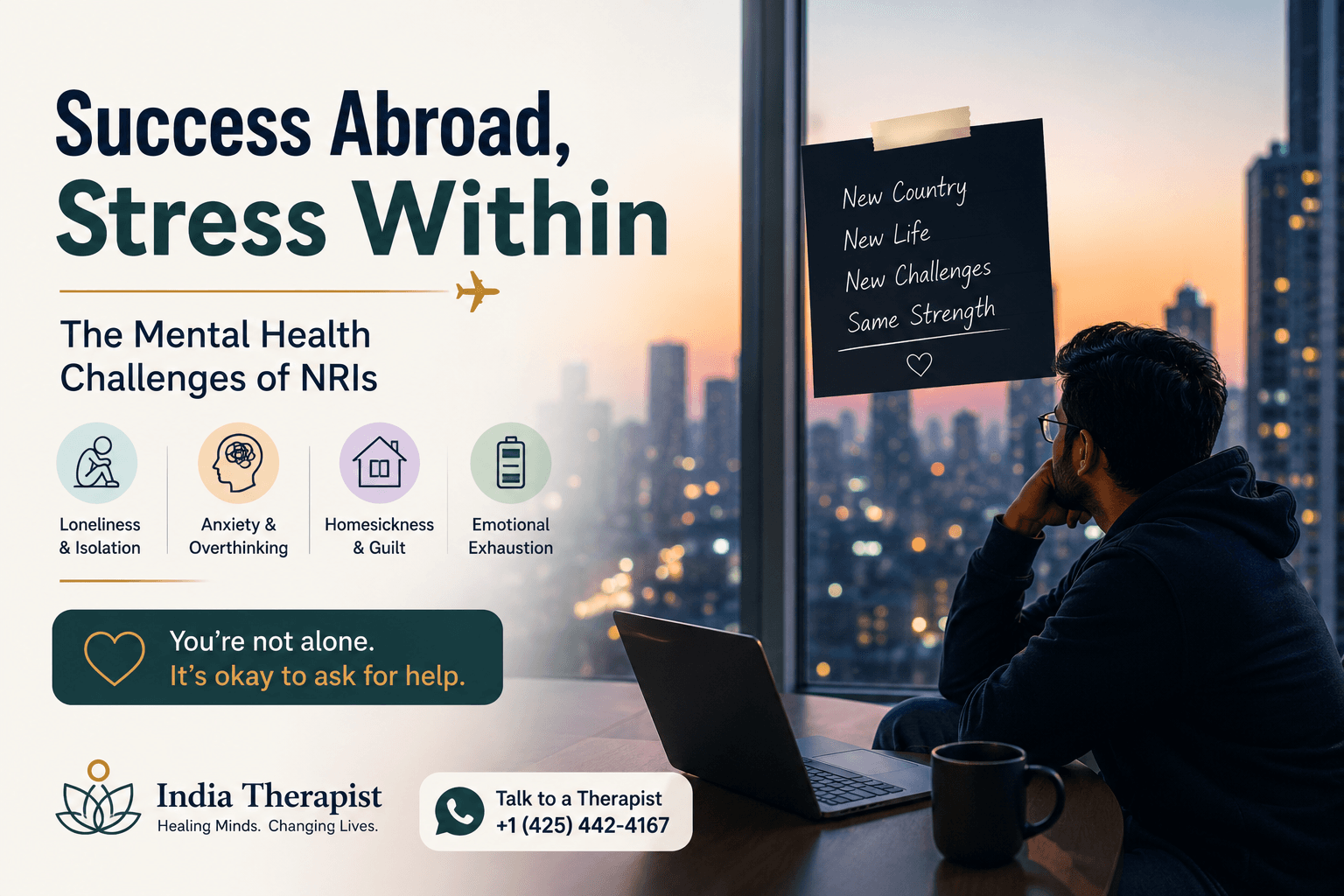
Success Abroad, Stress Within: The Mental Health Challenges of NRIs
While NRI life often appears successful from the outside, many individuals face hidden mental health challenges such as loneliness, anxiety, stress, emotional exhaustion, and identity struggles. The pressure to succeed abroad, adapt to new cultures, and maintain family expectations can impact emotional wellbeing. This blog explores the mental health realities of NRI life and how therapy, counseling, self-care, and support from Indian therapists can help individuals build emotional balance, resilience, and a stronger sense of belonging.
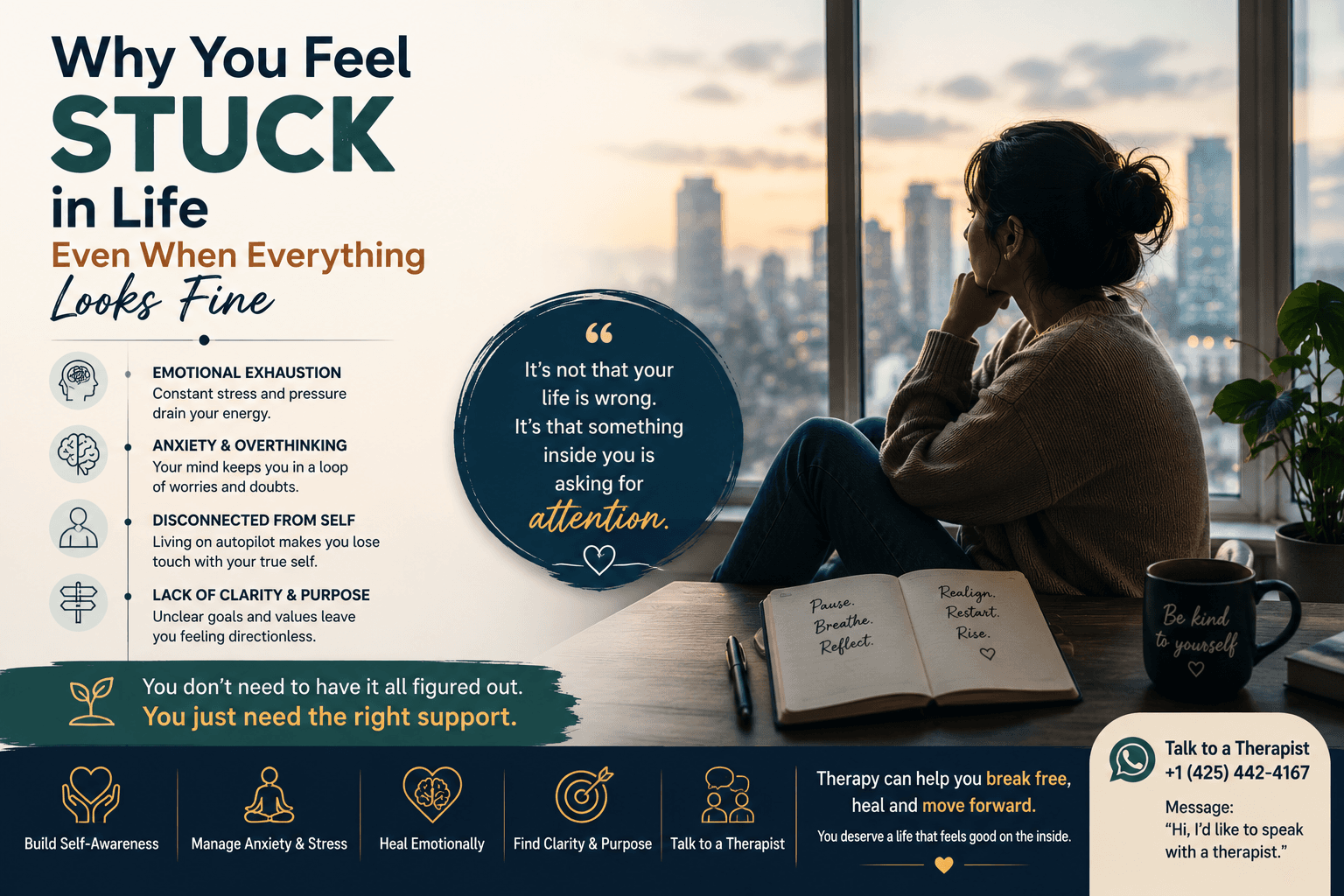
Why You Feel Stuck in Life Even When Everything Looks Fine
Many people feel stuck in life despite having successful careers, stable relationships, and financial security. Often, this feeling is caused by emotional exhaustion, anxiety, chronic stress, or a lack of self-awareness rather than a lack of achievement. This blog explores why emotional wellbeing matters, how mental health challenges can create feelings of stagnation, and how therapy can help individuals reconnect with themselves, gain clarity, and move forward with purpose.
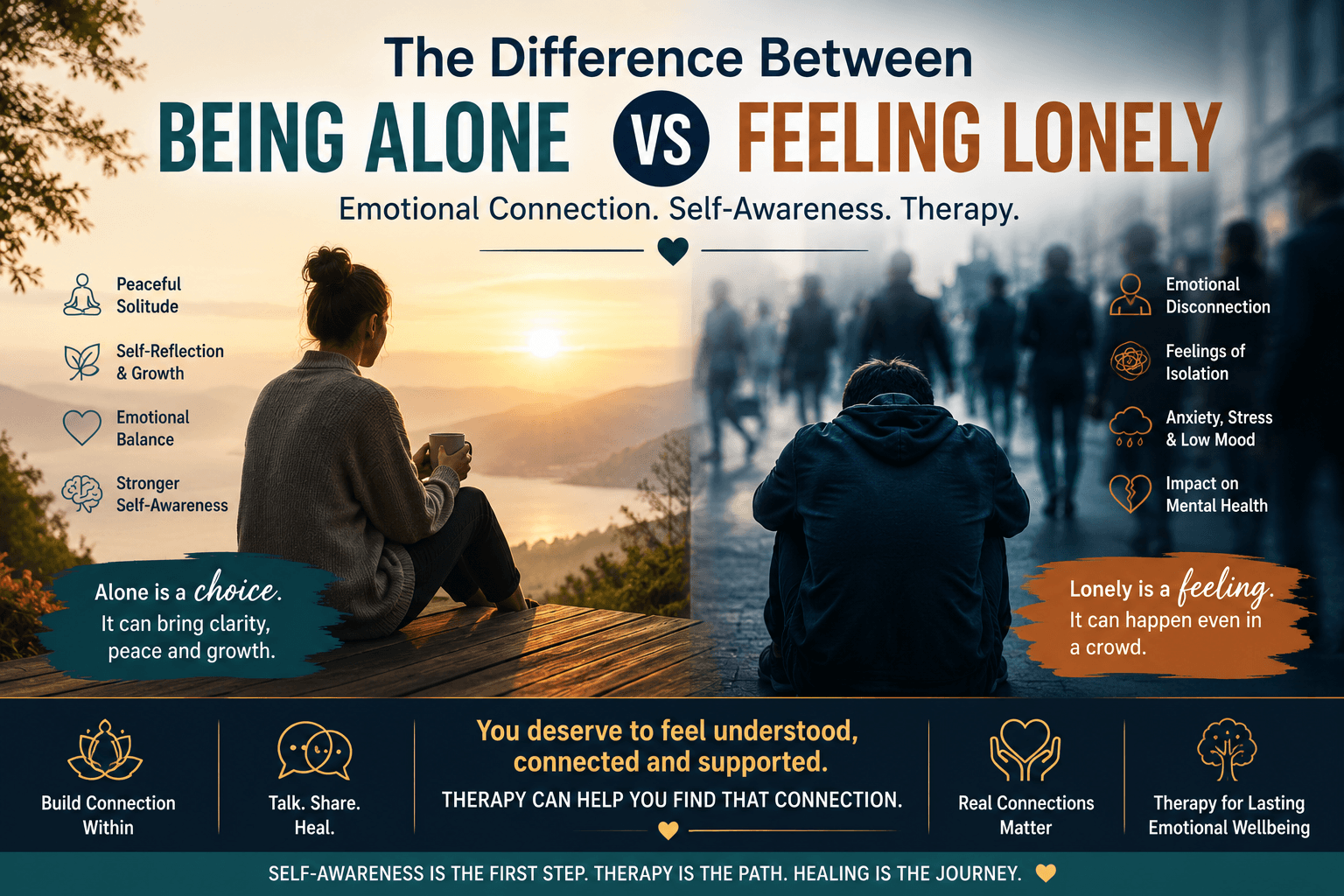
The Difference Between Being Alone and Feeling Lonely
Being alone and feeling lonely are two very different experiences. While solitude can be peaceful and restorative, loneliness is an emotional state that arises when we lack meaningful connection with ourselves or others. Many Indians and NRIs struggle with loneliness despite being surrounded by people, often due to cultural displacement, emotional disconnection, stress, anxiety, or a lack of genuine support. This blog explores the difference between solitude and loneliness, how loneliness affects mental health and emotional wellbeing, and why self-awareness, therapy, and emotional connection are essential for healing. Through support from Indian therapists, online counseling, and culturally sensitive therapy in India, individuals can rebuild meaningful relationships, strengthen emotional resilience, and find a deeper sense of belonging.
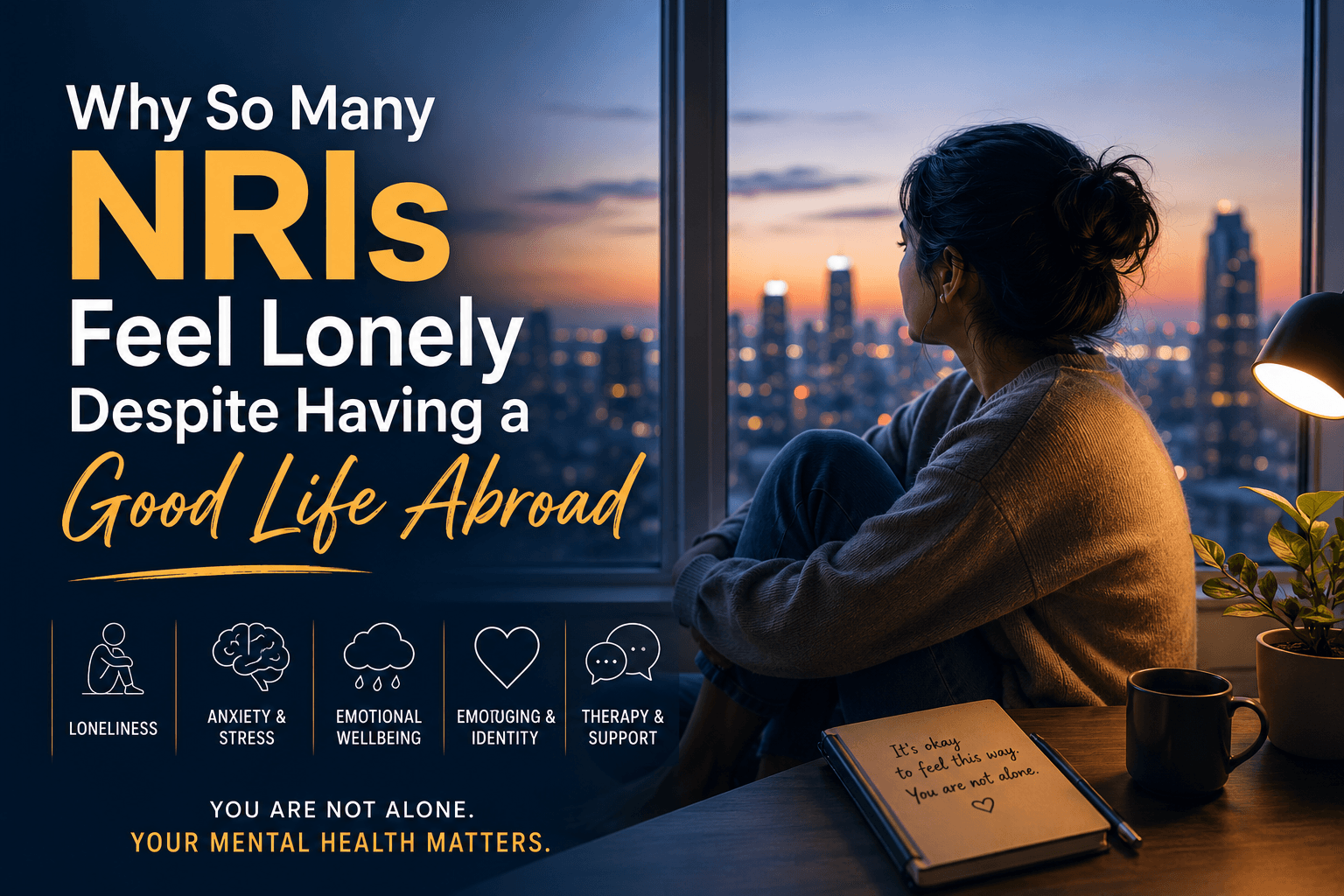
Why So Many NRIs Feel Lonely Despite Having a Good Life Abroad
Living abroad may offer career growth, financial stability, and exciting opportunities, but many NRIs quietly struggle with loneliness, emotional disconnection, and a loss of belonging. Despite having a successful life on the surface, the absence of close family, cultural familiarity, and meaningful emotional support can significantly impact mental health and emotional wellbeing. Over time, these feelings may lead to anxiety, stress, depression, and identity challenges. This blog explores why loneliness is so common among NRIs and how therapy can help individuals reconnect with themselves, build emotional resilience, and create a stronger sense of belonging. Through culturally sensitive support from Indian therapists and online therapy services, NRIs can improve their mental wellness, strengthen relationships, and find emotional balance while living abroad.

Why Mental Health Matters More Than Ever
Mental health is just as important as physical health, yet it’s often overlooked—especially among Indians and NRIs navigating cultural expectations and life transitions. This article explores why mental well-being matters, common challenges people face, and how seeking the right support can transform lives.