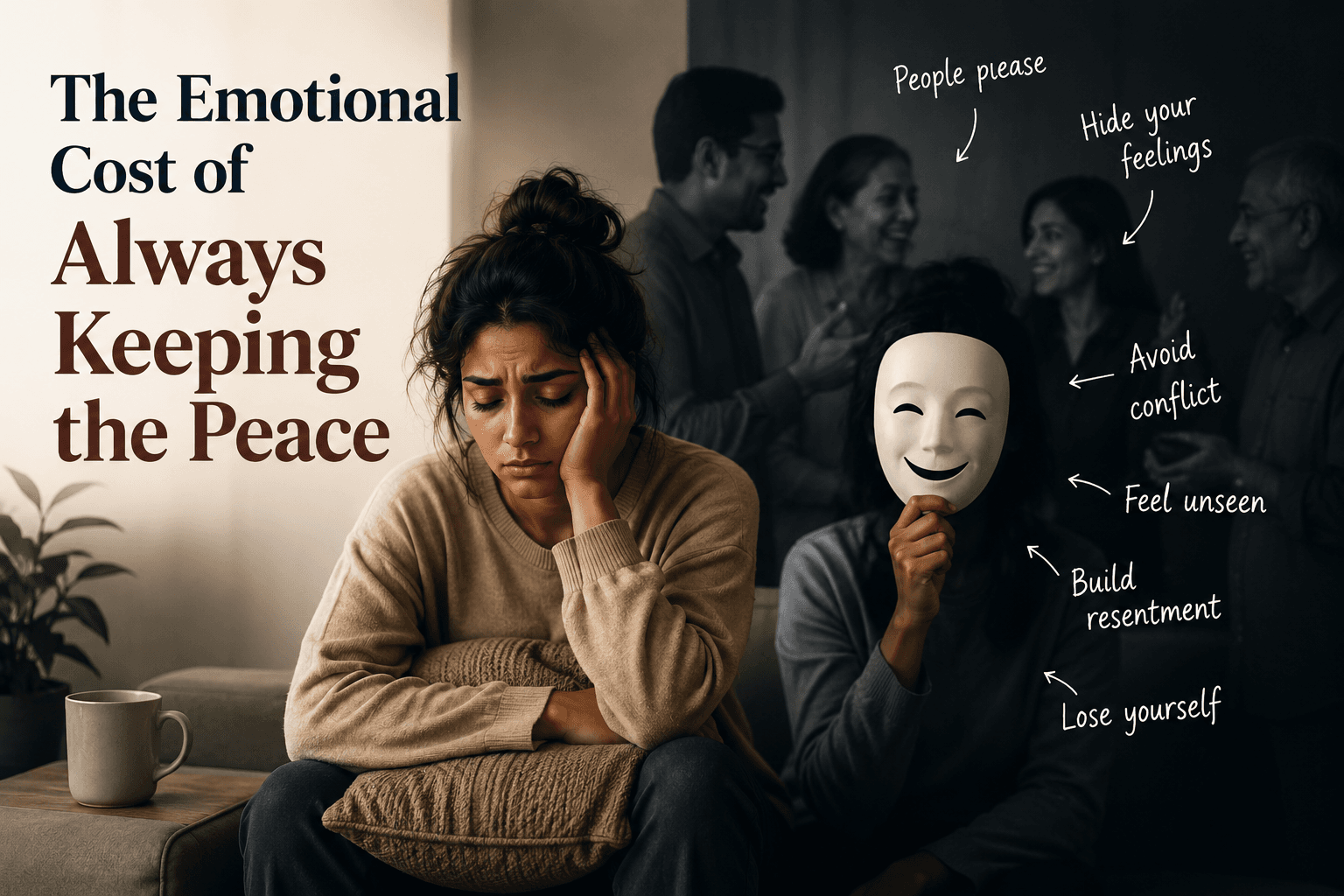
The Emotional Cost of Always Keeping the Peace
The Emotional Cost of Always Keeping the Peace
Keeping the peace can seem like a good thing. You avoid arguments, adjust to others, stay quiet during conflict, and try to make sure everyone around you is comfortable. In many Indian families, this is often praised as maturity. You may be called understanding, patient, responsible, or “easy to deal with.”
But when keeping the peace means constantly suppressing your own emotions, needs, and boundaries, it slowly starts affecting your mental health.
At India Therapist, many clients share that they have spent years avoiding conflict to protect relationships. They don’t want to hurt their parents, upset their partner, disappoint relatives, or create tension in the family. But over time, this habit becomes emotionally exhausting. The outside may look peaceful, but inside there is anxiety, resentment, sadness, and loneliness.
Real peace is not the absence of conflict. Real peace is the presence of emotional honesty, safety, and respect.
When Keeping the Peace Becomes Self-Abandonment
There is a difference between being calm and constantly silencing yourself. Healthy peace means communicating with care. Unhealthy peace means ignoring your own pain so others don’t feel uncomfortable.
Many people who always keep the peace grew up learning that conflict is dangerous. Maybe anger in the family felt scary. Maybe expressing emotions led to criticism. Maybe saying no was treated as disrespect. So they learned to stay quiet, agree, adjust, and avoid difficult conversations.
Over time, this becomes self-abandonment. You stop asking what you feel. You stop expressing what you need. You become more focused on preventing other people’s discomfort than protecting your own emotional wellbeing.
This pattern often leads to anxiety, stress, emotional exhaustion, and low self-worth.
Why This Happens in Indian Families
In many Indian homes, harmony is valued deeply. Family reputation, respect for elders, sacrifice, and adjustment are often treated as signs of good character. While these values can be beautiful, they can become harmful when one person is expected to carry everyone’s emotional comfort.
You may hear things like:
“Don’t create drama.”
“Just adjust.”
“Why are you making this a big issue?”
“Family comes first.”
“Be the bigger person.”
These messages teach people to suppress their truth for the sake of peace. This can be especially difficult for eldest children, daughters, caregivers, married individuals, and NRIs who already carry family expectations from a distance.
Therapy in India often helps clients understand that respecting family does not mean erasing yourself.
The Hidden Resentment Behind Silence
When you keep saying “it’s okay” when it is not okay, resentment begins to build. You may not express anger openly, but it may show up as irritation, emotional distance, passive-aggressive communication, or sudden breakdowns.
This is because emotions do not disappear when ignored. They stay inside and find other ways to come out.
Many people in counseling say, “I don’t know why I suddenly get angry.” But after reflection, they realize they have been swallowing hurt for years. Every unspoken boundary, every ignored need, every forced smile added to the emotional weight.
A therapist in India can help you process these suppressed emotions safely before they turn into deeper stress, anxiety, or depression.
The Impact on Relationships
Always keeping the peace can damage relationships even when your intention is to protect them. When you avoid honest conversations, your partner, family, or friends may never understand what you truly feel.
This creates emotional distance. You may be physically present but emotionally withdrawn. You may start feeling unseen, unheard, or unappreciated.
In romantic relationships and marriages, this often becomes a serious issue. One person keeps adjusting while the other assumes everything is fine. Eventually, the person who stayed silent feels lonely in the relationship.
This is where relationship counselling India can help. Therapy creates a safe space to express difficult emotions, improve communication, and rebuild emotional honesty without blame.
Why Peacekeepers Often Feel Anxious
People who always keep the peace are often highly alert to other people’s moods. They notice tone changes, facial expressions, silence, irritation, and small shifts in behavior. Their nervous system becomes trained to prevent conflict before it starts.
This can create constant anxiety.
You may overthink messages, worry about upsetting others, apologize too much, or feel responsible for everyone’s emotions. Even when nothing is wrong, your mind may stay alert, waiting for tension.
This emotional hyper-awareness is exhausting. Therapy helps you understand that you are not responsible for managing everyone’s feelings. You are responsible for communicating with respect and caring for your own mental health.
The Role of Boundaries
Boundaries are essential for real peace. Without boundaries, peace becomes performance.
A boundary does not mean you are rude, selfish, or disrespectful. It simply means you are clear about what is emotionally healthy for you.
Healthy boundaries may sound like:
“I need some time before I respond.”
“I understand your view, but I feel differently.”
“I don’t want to discuss this if we are shouting.”
“I care about you, but I cannot take responsibility for this.”
“I need rest today.”
These sentences may feel uncomfortable at first, especially if you are used to pleasing others. But boundaries help relationships become more honest and balanced.
How Therapy Helps You Stop Carrying Everyone’s Emotions
Therapy helps you understand why you became the peacekeeper. Maybe it came from childhood fear, family pressure, people-pleasing, trauma, or past relationship experiences.
A therapist helps you explore your emotional patterns without judgment. You begin to notice when you are silencing yourself, when you are acting out of fear, and when you are abandoning your needs to avoid conflict.
Through therapy, you learn healthier communication, emotional regulation, boundary-setting, and self-awareness. You also learn that conflict is not always dangerous. Sometimes, honest conflict can lead to deeper understanding.
At IndiaTherapist.com, individuals can connect with trusted Indian therapists online, therapists in India, and mental health professionals who understand Indian family dynamics, cultural pressure, anxiety, emotional suppression, and relationship struggles.
For NRIs, Keeping the Peace Can Feel Heavier
For NRIs, this pattern can become more complicated. Living away from home often creates guilt. You may avoid difficult conversations with parents because you already feel bad for being far away. You may keep saying yes to family expectations because you don’t want to seem selfish.
Many NRIs also carry pressure to maintain family harmony across distance. They may hide their stress, relationship problems, loneliness, or anxiety because they don’t want to worry their family.
NRI counselling mental health support with an Indian therapist online can help process this guilt with cultural understanding. Therapy helps NRIs balance love for family with emotional boundaries and personal wellbeing.
You Deserve Peace Too
If you have spent years keeping everyone else comfortable, you may have forgotten that your peace matters too. You are allowed to have feelings. You are allowed to disagree. You are allowed to need space. You are allowed to say no.
Keeping the peace should not cost you your mental health.
At India Therapist, we believe healing begins when you stop disappearing inside your relationships. You can be kind without being silent. You can be respectful without abandoning yourself. You can love people and still have boundaries.
📱 WhatsApp: +1 (425) 442-4167
💬 Message: “Hi, I’d like to connect with a therapist.”
Because peace that requires you to lose yourself is not real peace.
Real peace includes you.
Ready to talk to someone who understands?
Connect with an Indian therapist who speaks your language and understands your cultural context.