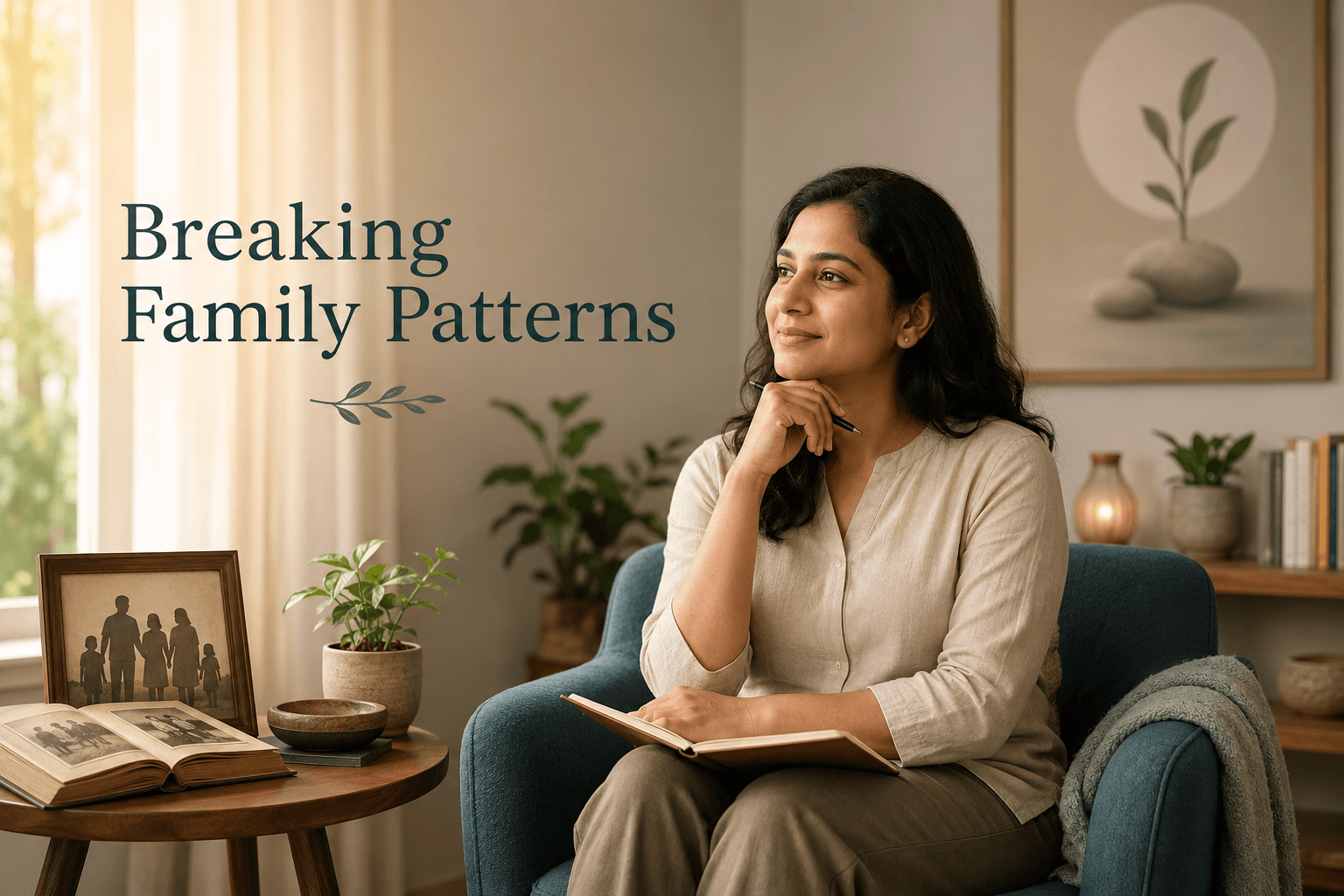
How Therapy Helps You Break Generational Patterns
How Therapy Helps You Break Generational Patterns
Many families carry patterns that silently pass from one generation to the next. These patterns may show up in how people communicate, express emotions, handle conflict, raise children, manage relationships, or deal with pain. Some patterns are healthy and supportive. Others can create emotional wounds that continue for years.
Generational patterns are not always obvious. They may sound like normal family habits: “We don’t talk about feelings,” “Parents are always right,” “Anger is normal in this house,” “Women must adjust,” “Men should not cry,” or “Family reputation matters more than personal pain.”
Over time, these beliefs shape mental health, self-worth, relationships, and emotional wellbeing.
At India Therapist, many clients come to therapy feeling anxious, emotionally exhausted, guilty, or stuck without fully understanding why. As therapy progresses, they often discover that their struggles are connected not only to their present life but also to family trauma, childhood experiences, and emotional patterns they inherited.
Breaking generational patterns does not mean blaming your family. It means becoming aware of what has hurt you, understanding what needs to change, and choosing a healthier way forward.
What Are Generational Patterns?
Generational patterns are repeated behaviors, beliefs, emotional responses, and relationship dynamics that move through families over time.
For example, if a family avoids difficult conversations, children may grow up learning to suppress emotions. If anger is the main form of communication, children may learn that conflict means shouting or fear. If parents constantly criticize, children may grow into adults with low self-worth or a harsh inner voice.
Some common generational patterns include:
Emotional suppression
Fear-based parenting
Constant criticism
People-pleasing
Poor boundaries
Anger and conflict avoidance
Silence around trauma
Gender-based expectations
Shame around mental health
Pressure to sacrifice personal needs for family approval
These patterns can feel normal because they are familiar. But familiar does not always mean healthy.
Family Trauma Can Be Passed Down Emotionally
Family trauma does not always come from one major event. It can also come from repeated emotional experiences such as neglect, criticism, control, rejection, instability, or lack of affection.
A child may grow up in a home where physical needs are met, but emotional needs are ignored. They may be fed, educated, and protected, but rarely heard, comforted, or emotionally understood.
This emotional neglect can affect adult life in quiet ways. A person may struggle to trust others, express feelings, set boundaries, or believe they are worthy of love.
When these wounds remain unhealed, they may unknowingly influence the next generation. A parent who was never comforted as a child may struggle to comfort their own child. A person raised with criticism may become critical of themselves or others. Someone who grew up in emotional silence may find vulnerability uncomfortable.
Therapy helps bring these hidden patterns into awareness.
Why Awareness Is the First Step to Healing
You cannot change a pattern you cannot see.
Many people repeat family patterns because they do not recognize them as patterns. They may think, “This is just how families are,” or “This is how I was raised.” But therapy creates space to pause and ask deeper questions.
A therapist may help you explore:
How were emotions handled in your home?
What did you learn about love, anger, success, and failure?
Were your needs respected?
Were boundaries allowed?
How did your family respond to sadness, fear, or disagreement?
What patterns are you repeating today?
This emotional awareness is powerful. It helps you understand that many of your reactions are learned responses, not permanent personality traits.
For example, you may realize that your fear of disappointing others comes from growing up in a family where love felt conditional. Or your difficulty saying no may come from being taught that obedience equals respect.
Once you see the pattern, you can begin changing it.
Therapy Helps You Separate Love From Harmful Patterns
One reason breaking generational patterns is difficult is because family relationships are emotionally complex. You may love your parents or family members and still feel hurt by certain behaviors.
Many people feel guilty when they begin questioning family patterns. They may worry that seeking therapy means disrespecting their family.
But therapy is not about attacking your family. It is about understanding your experience honestly.
You can acknowledge that your parents did their best with what they knew and still recognize that some things affected you deeply. Both can be true.
A therapist in India can help clients navigate this complexity with cultural sensitivity. In Indian families, respect, duty, sacrifice, and family loyalty are deeply valued. Therapy helps individuals honor their relationships while also protecting their mental health and emotional wellbeing.
Breaking Patterns Requires Boundaries
Boundaries are one of the most important tools for breaking generational patterns.
Many people grow up in families where boundaries are misunderstood. Saying no may be seen as disrespect. Privacy may be seen as secrecy. Choosing your own path may be seen as rebellion.
As a result, adults may struggle to make independent decisions, express needs, or protect emotional space.
Therapy helps you understand that boundaries are not rejection. Boundaries are a way of creating healthier relationships.
Healthy boundaries may sound like:
“I need time to think before making this decision.”
“I am not comfortable discussing this right now.”
“I respect your opinion, but I need to choose what is right for me.”
“I want to continue this conversation calmly.”
“I care about you, but I cannot carry this responsibility alone.”
Boundaries help stop harmful patterns from continuing automatically.
Therapy Helps Heal the Inner Child
Many generational patterns affect the inner child, the part of you that still carries early emotional experiences.
If you grew up feeling unseen, criticized, compared, controlled, or emotionally unsupported, that younger part of you may still seek approval, safety, and validation.
This can show up in adulthood as anxiety, people-pleasing, fear of conflict, perfectionism, relationship insecurity, or low self-worth.
Therapy helps you reconnect with these younger emotional parts with compassion. Instead of judging yourself, you begin to understand why certain situations trigger you.
For example, being ignored by a partner may feel extremely painful because it reminds your nervous system of being emotionally dismissed as a child. Criticism at work may feel overwhelming because it activates old feelings of never being good enough.
Through emotional healing, therapy helps you respond from awareness instead of old wounds.
Generational Patterns Affect Relationships
The way we experience family often shapes the way we approach relationships.
If you grew up around emotional distance, you may find emotional intimacy uncomfortable. If you saw constant conflict, you may either avoid conflict completely or repeat unhealthy communication patterns. If love felt conditional, you may fear abandonment or become overly dependent on approval.
Relationship counselling India often helps individuals and couples understand how family patterns influence current relationship struggles.
Common relationship patterns include:
Choosing emotionally unavailable partners
Avoiding difficult conversations
Becoming defensive during conflict
Struggling to trust
Overgiving to earn love
Feeling anxious when someone pulls away
Repeating familiar but unhealthy dynamics
Therapy helps you notice these patterns and build healthier ways of connecting.
For NRIs, Generational Patterns Can Feel More Complicated
NRIs often live between two emotional worlds. They may carry Indian family expectations while also adapting to a more individualistic culture abroad.
This can create inner conflict. They may want independence but feel guilty. They may want emotional openness but come from families where feelings were not discussed. They may want boundaries but fear hurting their parents.
NRI counselling mental health support can be especially helpful because cultural context matters. Working with an Indian therapist online allows NRIs to explore family trauma, guilt, identity, boundaries, and emotional healing with someone who understands Indian family systems.
Therapy helps NRIs create a balanced path, one that respects family without losing the self.
Breaking the Pattern Does Not Happen Overnight
Healing generational patterns takes time. These patterns were built over years, sometimes decades. They cannot be changed in one conversation.
There may be resistance from family members. Some may not understand your changes. Some may say you are becoming selfish or too sensitive. This can feel painful.
But growth often feels uncomfortable in the beginning because it challenges old roles.
Small changes matter:
Speaking honestly instead of suppressing emotions
Choosing calm communication instead of shouting
Setting one boundary
Apologizing when you make a mistake
Allowing children to express feelings
Seeking therapy instead of staying silent
Choosing self-awareness over automatic reaction
Each small choice interrupts the cycle.
How Therapy Supports Long-Term Change
Therapy provides a safe and structured space to understand, process, and change generational patterns.
A therapist can help you:
Identify family trauma and emotional patterns
Understand childhood wounds
Build emotional awareness
Set healthy boundaries
Reduce guilt and anxiety
Heal low self-worth
Improve communication
Develop healthier relationships
Manage family pressure
Break cycles of emotional suppression
At IndiaTherapist.com, individuals and NRIs can connect with trusted therapists in India, Indian therapists online, and mental health professionals who offer culturally sensitive support for family trauma, anxiety, depression, emotional healing, relationship struggles, and personal growth.
Therapy does not erase the past. But it helps you stop living from it.
You Can Be the Turning Point
Breaking generational patterns is not easy, but it is powerful. When one person chooses awareness, healing, and emotional honesty, the entire family story can begin to shift.
You may not be responsible for the patterns you inherited.
But with support, you can choose which patterns continue.
You can choose communication instead of silence. Boundaries instead of guilt. Healing instead of repetition. Compassion instead of criticism. Emotional awareness instead of emotional avoidance.
At India Therapist, we believe healing is not only personal. Sometimes, it becomes generational.
📱 WhatsApp: +1 (425) 442-4167
💬 Message: “Hi, I’d like to connect with a therapist.”
Because the patterns may not have started with you.
But healing can begin with you.
Ready to talk to someone who understands?
Connect with an Indian therapist who speaks your language and understands your cultural context.