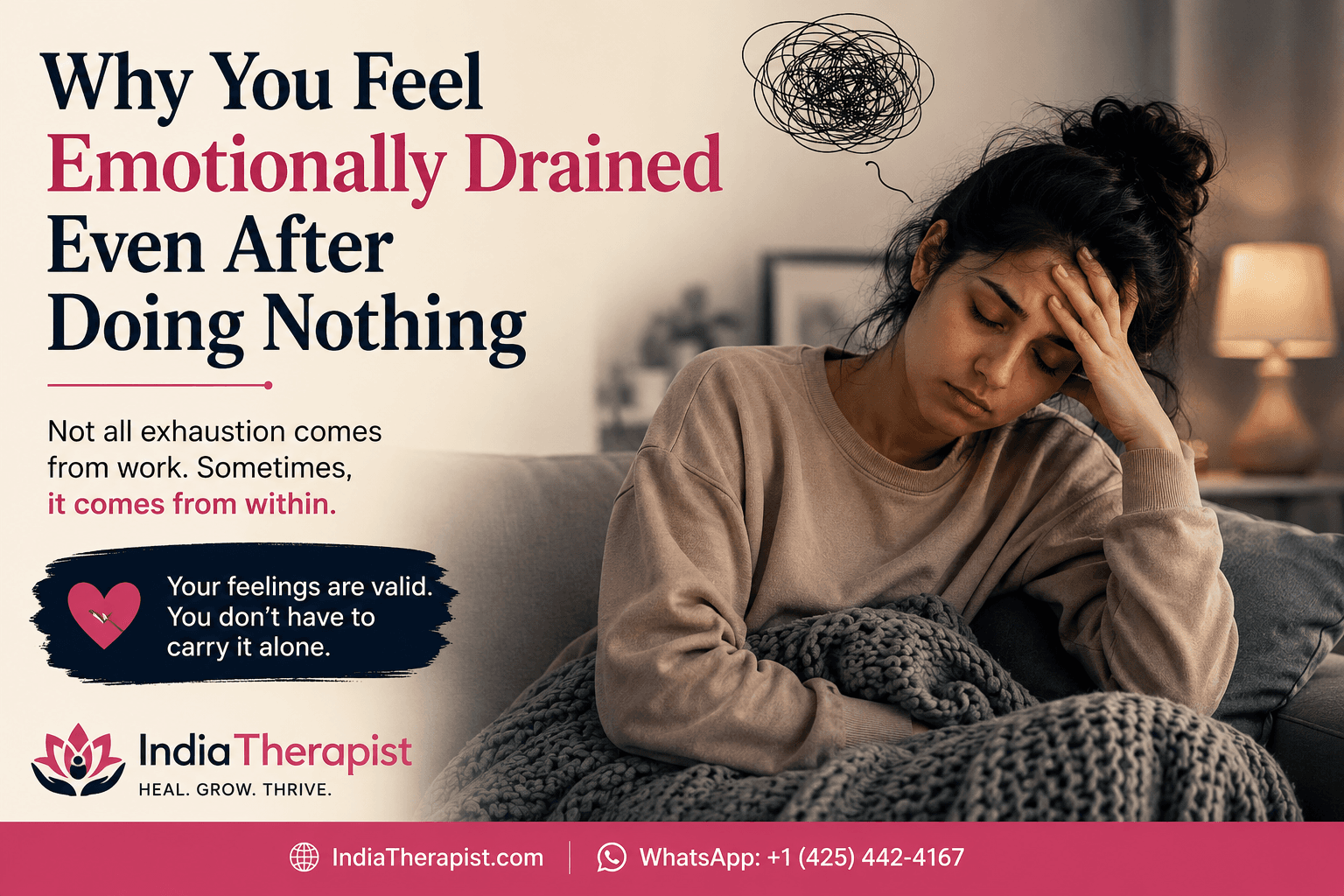
Why You Feel Emotionally Drained Even After Doing Nothing
Why You Feel Emotionally Drained Even After Doing Nothing
When You're Tired Without a Reason
Have you ever finished a day feeling completely exhausted, even though you barely did anything physically demanding? You may have stayed home, completed only a few tasks, or even rested for most of the day, yet you still feel mentally and emotionally drained.
Many people assume that exhaustion only comes from working too hard. But emotional exhaustion works differently. It doesn't always come from physical effort. Sometimes it comes from carrying invisible burdens that nobody else can see.
At India Therapist, many clients describe this feeling by saying, "I didn't do much today, but I feel completely exhausted." This experience is far more common than people realize. Emotional fatigue can quietly build for weeks, months, or even years before you recognize what's happening.
Understanding why this happens is the first step toward healing.
Emotional Energy Is Different from Physical Energy
Your body and your mind use energy in different ways. Physical tiredness usually improves after a good night's sleep. Emotional exhaustion often doesn't.
Even after sleeping for eight or nine hours, you may still wake up feeling heavy. You may struggle to concentrate, lose motivation, or feel emotionally disconnected without understanding why.
Many therapists in India explain that emotional energy is constantly being used—even when your body appears to be resting. Your brain may still be processing worries, replaying conversations, carrying guilt, or preparing for situations that haven't even happened yet.
This invisible mental work slowly drains your emotional reserves.
Your Mind May Never Actually Be Resting
Many people believe they are resting because they are sitting quietly or watching television. But resting your body doesn't always mean resting your mind.
While you're lying on the couch, your thoughts may still be racing.
You might replay something someone said weeks ago. You may worry about tomorrow's responsibilities. You may compare yourself with others on social media or wonder whether you're doing enough with your life.
Our Indian therapists online often remind clients that the brain doesn't distinguish much between imagined stress and real stress. If your mind constantly feels under pressure, your body responds as though you're facing an actual threat.
That constant state of mental alertness creates emotional exhaustion.
The Hidden Emotional Load You Carry Every Day
Many people don't realize how much emotional weight they carry.
You may constantly worry about your family, your career, your finances, your relationships, or your future. You may hide your own emotions so others don't worry. You may always try to stay positive, even when you're struggling inside.
Each of these emotional responsibilities quietly consumes energy.
At India Therapist, clients often discover that the real source of their exhaustion isn't their workload—it's their emotional load.
The more emotions you suppress, the heavier they become.
This is why therapy in India focuses not only on solving problems but also on helping people release the emotional weight they've been carrying for years.
Why Indians Often Ignore Emotional Exhaustion
In many Indian families, being emotionally tired isn't always recognized as something important.
People are encouraged to keep going, stay strong, and not complain. Rest is often seen as laziness rather than recovery.
From childhood, many of us hear phrases like:
"Just be positive."
"Everyone has problems."
"Don't think too much."
Although these words are usually spoken with good intentions, they often teach people to ignore their emotional needs.
Over time, emotional exhaustion becomes normal.
Many therapists India explain that this cultural conditioning makes it difficult for people to admit they need support. Instead of asking for help, they continue pushing themselves until burnout becomes unavoidable.
The NRI Experience: Emotional Fatigue Far from Home
For many NRIs, emotional exhaustion carries another layer.
Living abroad often means balancing career pressure, cultural adjustment, family expectations, financial responsibilities, and loneliness—all at the same time.
You may appear successful to everyone back home while quietly struggling every day.
Our NRI counselling mental health sessions often reveal something surprising.
Many NRIs don't feel exhausted because of work alone.
They're exhausted from pretending they're okay.
They miss home but feel guilty saying it.
They feel lonely but don't want to worry their families.
They carry emotional burdens silently because they believe that's what strength looks like.
Working with an online Indian therapist allows them to express those emotions without fear or judgment.
Sometimes the greatest relief comes simply from finally being heard.
How Emotional Exhaustion Affects Daily Life
When emotional exhaustion continues for too long, it slowly changes how you experience life.
Things that once brought excitement begin to feel like chores.
Simple decisions become overwhelming.
You stop looking forward to weekends because even rest doesn't feel refreshing.
Relationships become harder to maintain because you don't have enough emotional energy to connect.
Many people begin blaming themselves.
They wonder,
"Why am I so lazy?"
"Why can't I just feel normal?"
The truth is, emotional exhaustion isn't laziness.
It's a sign that your emotional system has been overloaded for too long.
How Therapy Helps You Recharge Emotionally
Healing emotional exhaustion doesn't happen by forcing yourself to be more productive.
It begins by understanding what's draining you.
When you work with a therapist in India, therapy becomes a place where you no longer have to hide your emotions.
Instead of constantly carrying everything alone, you begin sharing the weight.
At India Therapy, clients gradually learn to identify emotional triggers, process unresolved experiences, challenge unrealistic expectations, and develop healthier coping strategies.
Through Indian therapy, you also learn something many people were never taught:
Rest is productive.
Emotional recovery is necessary.
Your mental health deserves the same attention as your physical health.
Small Moments Create Big Healing
Recovery doesn't always require dramatic life changes.
Sometimes healing begins with very small moments.
Allowing yourself to say "I'm tired."
Taking a walk without checking your phone.
Spending time with someone who truly listens.
Practicing mindfulness for a few minutes.
Writing down emotions instead of suppressing them.
These simple practices slowly rebuild emotional energy.
Our best therapists in India often remind clients that healing isn't about becoming a different person.
It's about returning to yourself.
Learning to Listen to Yourself Again
One of the biggest consequences of emotional exhaustion is losing connection with your own needs.
You become so focused on meeting everyone else's expectations that you stop asking yourself one important question:
"How am I really feeling?"
Therapy helps rebuild that relationship.
Whether you're working with an Indian therapist, an online Indian therapist, or seeking relationship counselling India, the goal is the same—to help you understand yourself before trying to fix everything else.
As awareness grows, emotional exhaustion slowly gives way to emotional resilience.
You Don't Have to Carry Everything Alone
If you've been feeling emotionally drained, even on days when you've done very little, remember this:
Your exhaustion is real.
Your emotions are valid.
And you don't have to continue carrying everything by yourself.
Whether you're living in India or abroad, India Therapist provides compassionate support through therapy in India, Indian therapists online, relationship counselling India, and NRI counselling mental health services.
Healing doesn't begin when life becomes easier.
It begins when you finally give yourself permission to stop carrying invisible weight alone.
Sometimes the strongest thing you can do isn't pushing harder.
It's asking for support.
📞 WhatsApp: +1 (425) 442-4167
🌐 Visit: IndiaTherapist.com
Ready to talk to someone who understands?
Connect with an Indian therapist who speaks your language and understands your cultural context.